
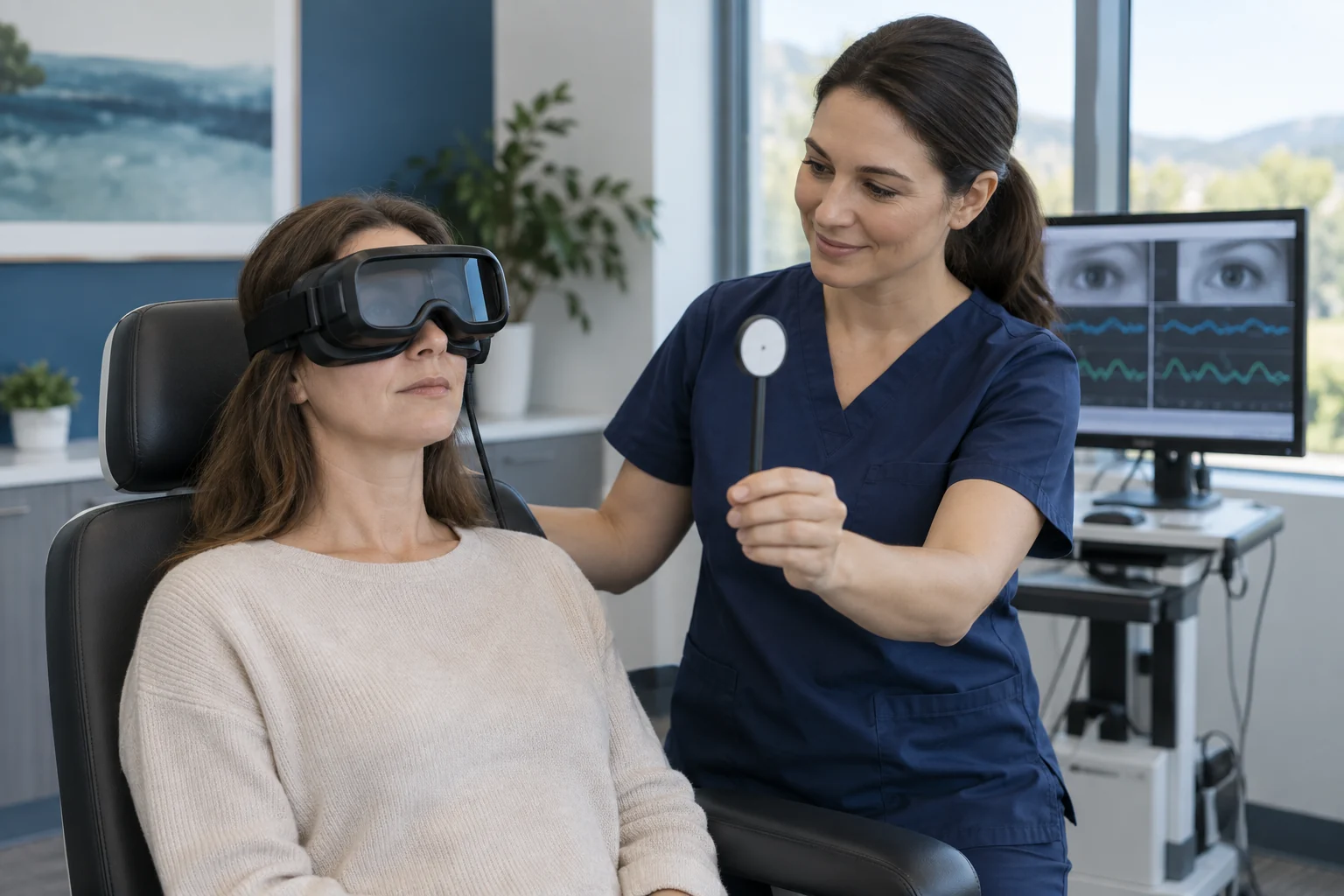
How does this test work?
VNG records involuntary eye movements called nystagmus. Eye-movement patterns help assess the vestibular system, which includes the inner ears and nerves involved in balance. Testing may compare responses during visual tracking, position changes and warm or cool ear stimulation.
When might this test be considered?
Your clinician decides whether the test is appropriate for your symptoms and medical history.
- Persistent or recurring dizziness
- A spinning sensation (vertigo)
- Unsteadiness or balance difficulties
What happens during the test?
- You wear video goggles while eye movements are recorded.
- You may follow visual targets or change head and body positions.
- Some assessments include warm or cool stimulation of the ears and may briefly cause dizziness.
How should I prepare?
Your care team will send instructions for your specific assessment. Ask them before changing any medication; certain medicines and eye makeup may affect the test.
How are results interpreted?
The recordings are reviewed with your symptoms and medical history to help guide appropriate follow-up care.
What are the limitations?
VNG alone cannot establish a vestibular diagnosis. Your clinician interprets the recordings with your symptoms and history; other assessments may be needed.
Comfort and safety
Some parts of testing can briefly provoke dizziness or nausea. Ask about arranging a ride home in case these effects last longer. Tell the team how you are feeling during the assessment.
Common questions about VNG
Why are my eyes tested when I feel dizzy?
The balance system helps keep vision steady during movement. Recording eye responses gives clinicians evidence about how that system is functioning.
Do I need to change medicines or meals?
Your instructions may address medicines and food. Confirm the details for your assessment and do not stop medication without the prescribing clinician's advice.
Questions to ask before booking
- Is the exact test on my clinician's order available?
- Where will the appointment take place, and what should I bring?
- Are there specific preparation or referral instructions?
- What fees apply, and what should I check with my insurance provider?
- Who will explain my results, and how should I arrange follow-up?
Confirm these details with VitaSense before booking. Availability, coverage and results timing are not established by this general test guide.
Patient information source
For more information about the test, see NIH MedlinePlus VNG information.