
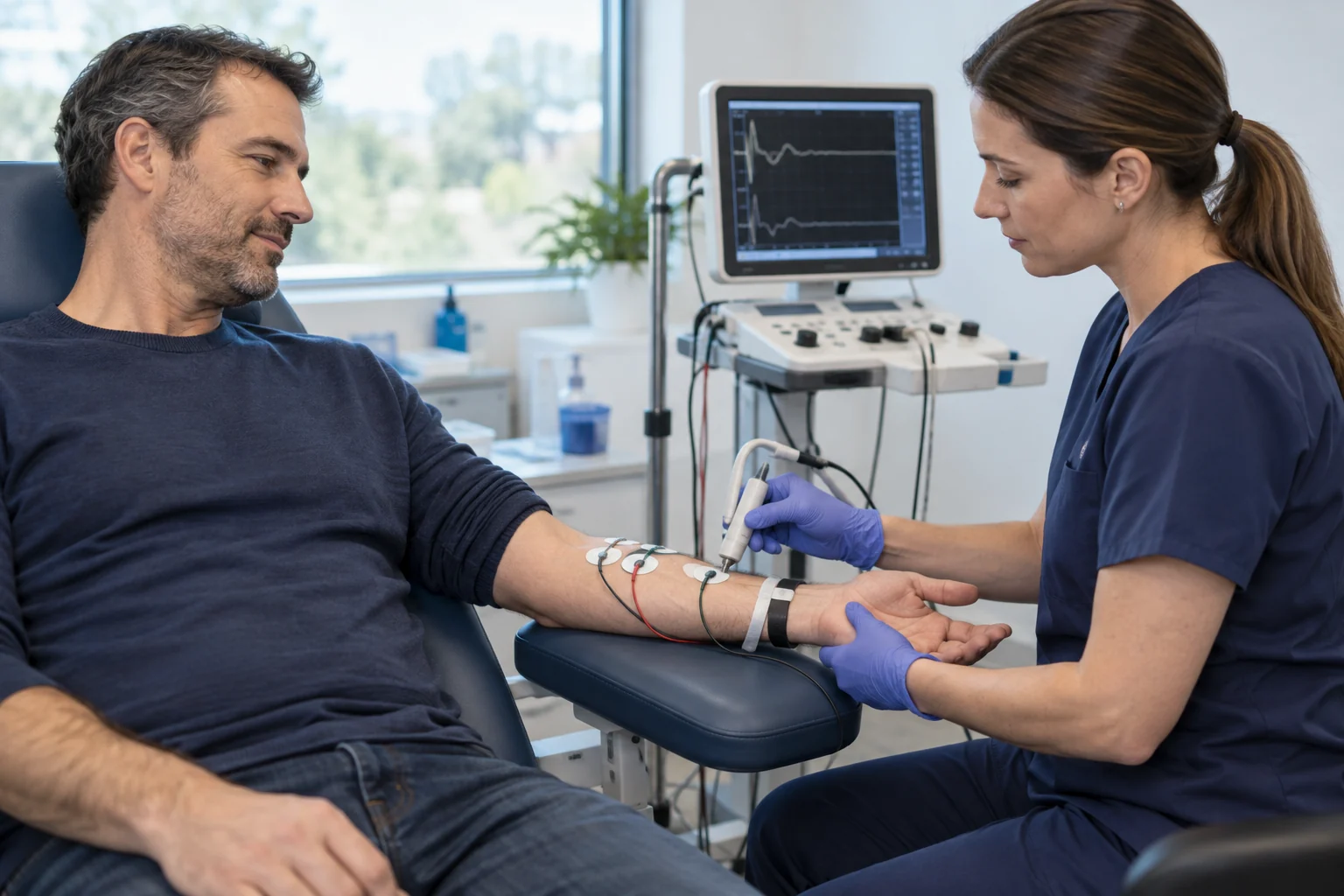
How does this test work?
NCV describes the speed of a nerve signal; NCS means nerve conduction study. Recordings also help assess the strength of the response. These measurements give your clinician information about nerve function, rather than a picture of the nerve.
When might this test be considered?
Your clinician decides whether the test is appropriate for your symptoms and medical history.
- Numbness or pins and needles
- Muscle weakness
- Possible trapped nerve or nerve damage
What happens during the test?
- Small recording electrodes are placed on the skin.
- Brief electrical pulses stimulate a nerve and its response is recorded.
- You may feel a short tapping or tingling sensation.
How should I prepare?
Wear comfortable clothing that allows access to the area being tested. Bring a list of your medicines and follow any instructions from your care team.
How are results interpreted?
A specialist reviews the size and speed of the nerve responses alongside your symptoms and history, then shares a report with your referring clinician.
What are the limitations?
Findings need to be considered with your symptoms and examination. Your clinician may use other tests to distinguish nerve problems from muscle conditions.
Comfort and safety
Brief electrical stimulation can cause tingling or discomfort. Tell the testing team if it becomes difficult to tolerate. Let them know in advance if you have a pacemaker or implanted defibrillator.
Common questions about NCV
Is a nerve conduction study the same as EMG?
No. NCS uses skin electrodes to assess nerve signals. Needle EMG measures muscle activity. They may be ordered together, but this page does not confirm that VitaSense provides needle EMG.
Should I use lotion before testing?
Clean skin helps electrodes work properly. Ask your care team about avoiding creams or lotions on the test area.
Questions to ask before booking
- Is the exact test on my clinician's order available?
- Where will the appointment take place, and what should I bring?
- Are there specific preparation or referral instructions?
- What fees apply, and what should I check with my insurance provider?
- Who will explain my results, and how should I arrange follow-up?
Confirm these details with VitaSense before booking. Availability, coverage and results timing are not established by this general test guide.
Patient information source
For more information about the test, see NIH MedlinePlus nerve conduction information.