
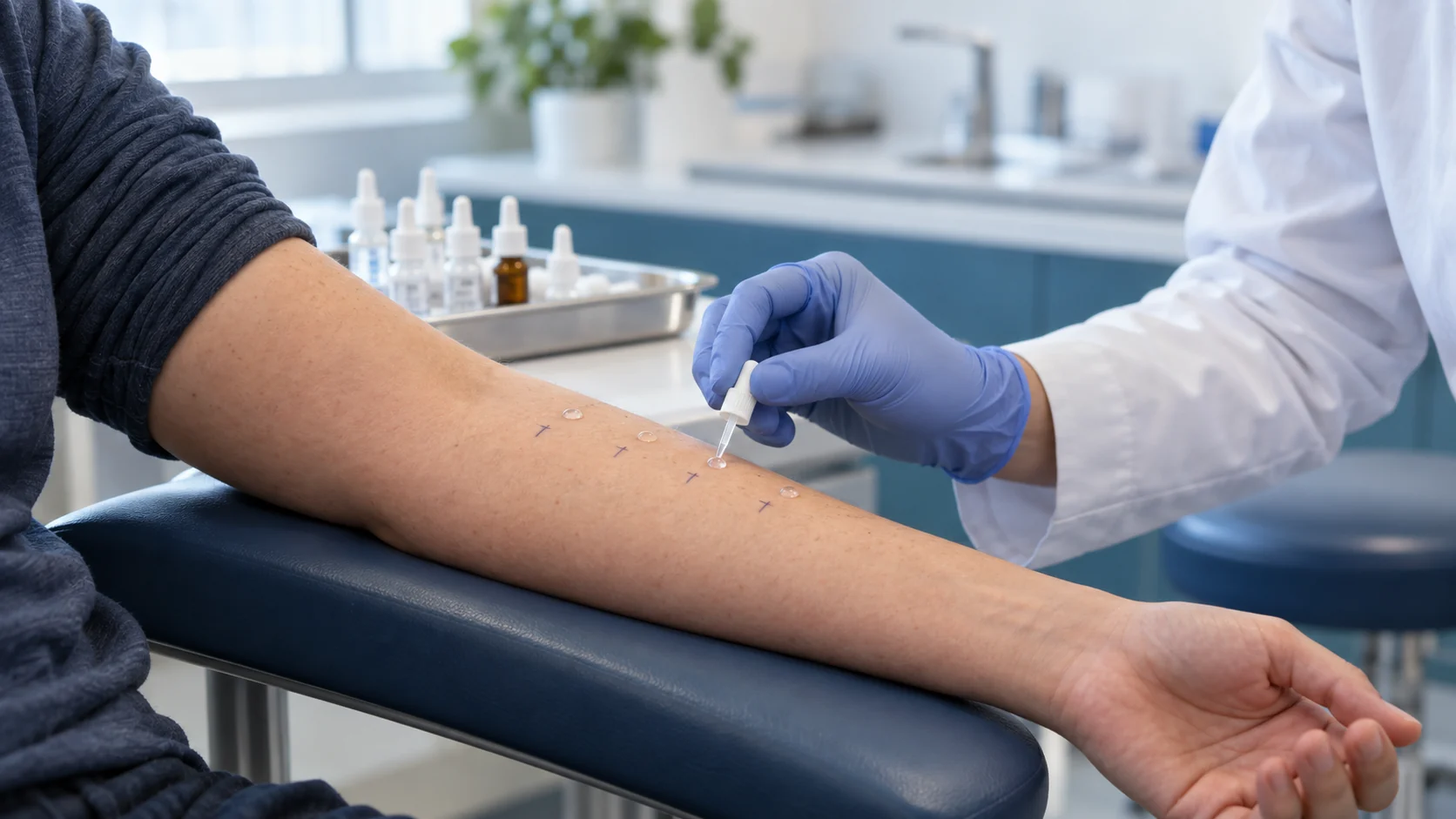
How does this test work?
Skin prick testing looks for an immediate skin response to selected allergens. A small raised, itchy area may develop at a reactive site. The selection of allergens should reflect your symptoms and history, rather than assuming every possible allergy can be checked at once.
When might this test be considered?
Your clinician decides whether the test is appropriate for your symptoms and medical history.
- Suspected reactions to pollen or dust mites
- Possible animal or food allergy
- Symptoms that need targeted investigation
What happens during the test?
- Small drops of selected allergens are placed on your forearm.
- The skin is gently pricked through each drop.
- The team usually checks for a response after about 15–20 minutes.
How should I prepare?
Some medicines, including antihistamines, can affect results. Follow your own appointment instructions and check with your care team before stopping any medication.
How are results interpreted?
A clinician interprets any skin response in the context of your symptoms. A positive result alone does not establish the whole diagnosis.
What are the limitations?
A skin reaction is one piece of evidence. The clinician also considers when symptoms occur and your exposure history. Medicines and certain skin conditions can affect whether testing is suitable.
Comfort and safety
Temporary itching and redness are common. A severe allergic reaction is rare but possible, so testing belongs in a clinical setting prepared to respond. Discuss previous severe reactions before the appointment.
Common questions about Skin Allergy Test
Is skin prick testing the same as patch testing?
No. Patch testing assesses delayed contact reactions over a longer period. This page describes skin prick testing; it does not confirm patch-test availability.
Should I stop my antihistamine?
Ask your care team which medicines could interfere and when to adjust them. Do not stop a prescribed medicine on your own.
Questions to ask before booking
- Is the exact test on my clinician's order available?
- Where will the appointment take place, and what should I bring?
- Are there specific preparation or referral instructions?
- What fees apply, and what should I check with my insurance provider?
- Who will explain my results, and how should I arrange follow-up?
Confirm these details with VitaSense before booking. Availability, coverage and results timing are not established by this general test guide.
Patient information source
For more information about the test, see NIH MedlinePlus allergy skin test information.