
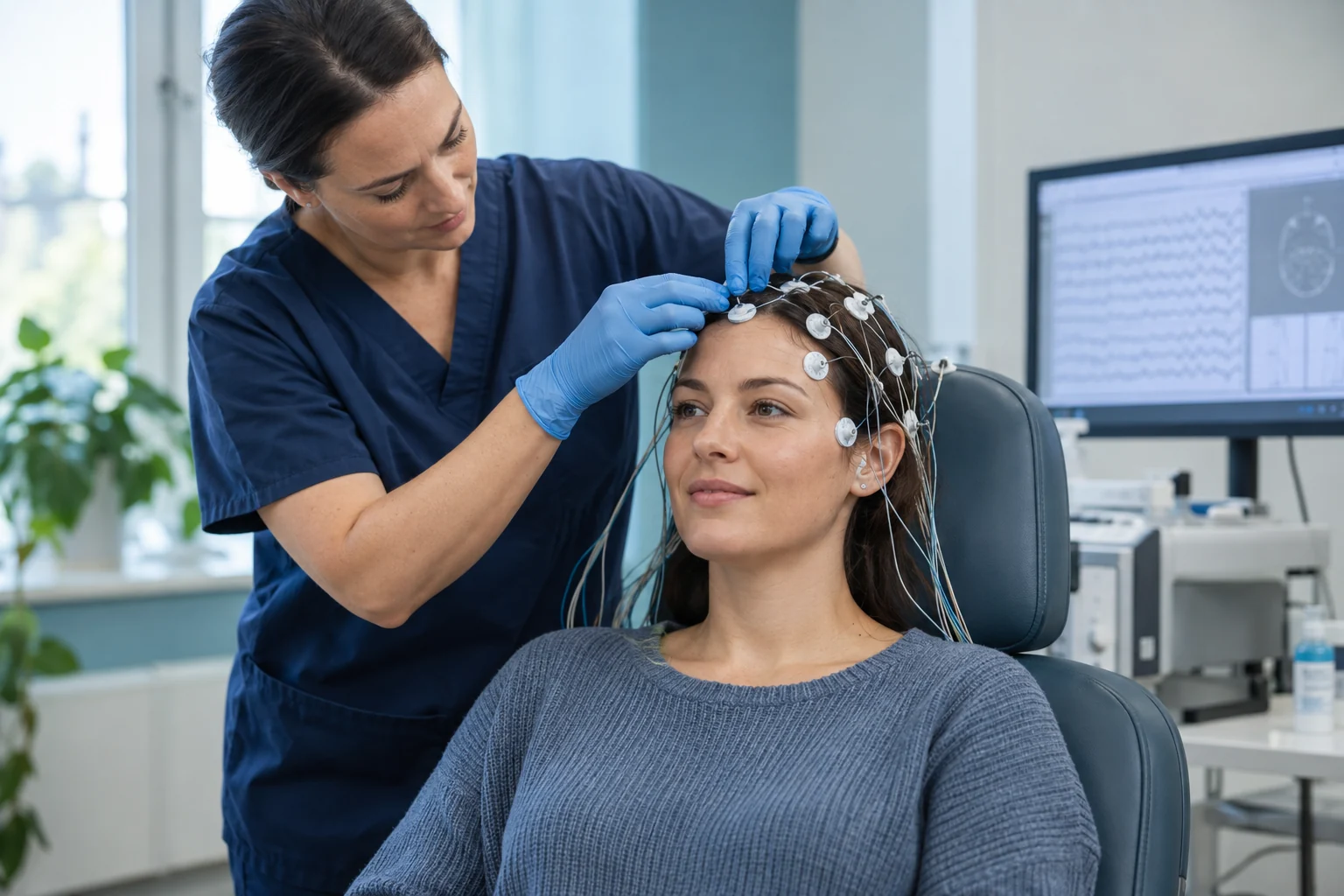
How does this test work?
Scalp electrodes detect electrical patterns produced by brain activity. Movement can affect the recording, so you may be asked to stay still. Depending on the study, the team may record responses during rest, eye opening, controlled breathing or flashing lights.
When might this test be considered?
Your clinician decides whether the test is appropriate for your symptoms and medical history.
- Suspected seizures or epilepsy
- Episodes of altered awareness
- Monitoring a known neurological condition
What happens during the test?
- Small electrodes are attached to your scalp.
- You rest while the recording is made.
- You may be asked to open and close your eyes, breathe deeply, or look at a flashing light.
How should I prepare?
Arrive with clean, dry hair and avoid styling products. Follow any specific sleep or medication instructions given by your care team.
How are results interpreted?
A specialist reviews the recording alongside your symptoms and history. Your referring clinician explains the findings and any next steps.
What are the limitations?
A normal EEG does not prove that a seizure never happened. The recording needs clinical interpretation alongside the event history. EEG does not measure intelligence.
Comfort and safety
Scalp electrodes may feel sticky. Breathing exercises or flashing lights can trigger a seizure in susceptible people; tell the team about your seizure history and concerns before testing.
Common questions about EEG
Do I need to stay awake the night before?
Only follow sleep-restriction instructions if they were specifically given for your study. Confirm sleep, caffeine and medication guidance with your care team.
Is ambulatory or overnight EEG available?
Longer recordings are different study types. Confirm the order and availability with VitaSense; this page does not establish that those options are offered.
Questions to ask before booking
- Is the exact test on my clinician's order available?
- Where will the appointment take place, and what should I bring?
- Are there specific preparation or referral instructions?
- What fees apply, and what should I check with my insurance provider?
- Who will explain my results, and how should I arrange follow-up?
Confirm these details with VitaSense before booking. Availability, coverage and results timing are not established by this general test guide.
Patient information source
For more information about the test, see NIH MedlinePlus EEG information.